When our parent company first started PC Disposal in 1997, there were very few
competitors. Since then, it seems like there are new computer recycling firms starting up
every week. And with such intense competition it’s inevitable that a few bad apples
have figured out ways to cut corners or trick clients into using their services. Much of
our business now comes from companies that once used these less-than-legit computer
recycling companies. However, we thought it would be nice to spare you the school of hard
knocks by letting you know upfront what these little tricks are:
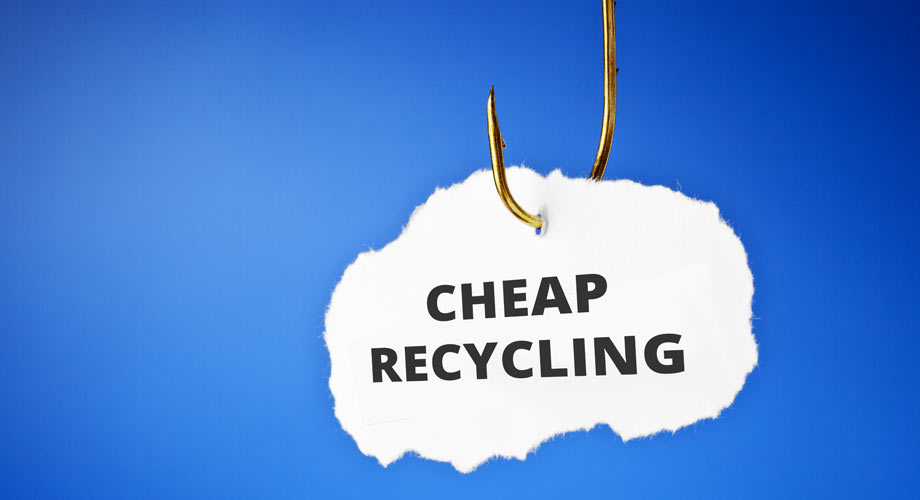
This little trick has become so common that even otherwise legitimate computer recycling centers are starting to use it. They offer an incredibly low bid on your equipment just to get your business. However, there are a few small charges that can’t be “quoted exactly” until they complete the work. Sometimes these charges aren’t even mentioned except in the small print of the contract.
The result: Bloated fees you didn’t even know existed. Once you get the bill you realize that your “lowest bidder” may actually be the highest bidder.
Protect yourself: Always analyze the total cost to remove, ship and process your
equipment. Make sure the agreed upon rate contains all recycling costs. Read your contracts carefully. Also, be sure you are comparing apples to apples
by analyzing what each computer recycling firm is offering for the money (click here to view PC Disposal’s services).
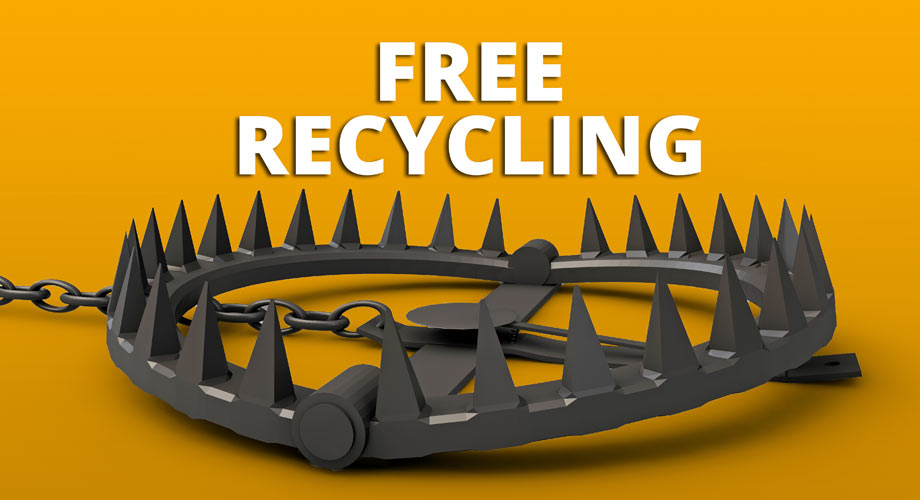
For this trick, so-called computer recyclers promise to do everything the competition does and they’ll even do it for free. They claim that they make their money by reselling your old equipment. This is the most dangerous trick that can be played on an unsuspecting business.
To understand why this so dangerous, it helps to understand just a little about how the computer recycling industry works. First of all, just like the fly-by-night computer recycling companies, legitimate computer recyclers make nearly all of their profits from reselling your computers. Very little money is made on properly preparing your computers for disposal or resale because of the labor-intensive tasks involved (e.g., asset tag removal, sanitizing or destroying hard drives, EPA compliant disposal, etc.). This means that if a computer recycler isn’t charging a fee for processing, they are losing money on every computer they aren’t able to sell. The more computers they process, the more money they lose.
"A city rep asked why we didn't offer free recycling, but he later admitted they had privacy issues with their last 'free' recycler."
But why should you care if your computer recycling firm is making a profit? Here’s why: Let’s say that your computer disposal company is only able to resell 20% of your computers (a good estimate considering computer obsolescence and the glut of used computers). Now, ask yourself why they would bother to properly dispose all of those remaining computers when they know they will start losing money on each and every unit they process.
The result: If you guessed that those remaining computers will probably be dumped into a landfill without being processed, you’re right. But what are the chances that someone will actually try to find your computers to recover sensitive data on your computers? Expect your odds to be 100% against your company. Identity thieves, environmentalists and privacy watchdogs are constantly combing through landfills, wreaking havoc on businesses that haven’t properly disposed of their equipment. And extracting private data from hard drives is easy, even if they’ve been reformatted.
For example, we recently had a representative from a city government ask us to bid on a computer disposal project. He was impressed with our services, but couldn’t understand why we couldn’t offer the services for free like their last vendor. Of course, we were curious and had to ask why he just didn’t use the previous computer recycling company. His answer, “Well, we had a few privacy problems....”
Protect yourself: While you should always be suspicious of computer recycling firms that don’t charge, it always doesn’t necessarily mean that those who do charge are much better. Put in a little due diligence. Is the recycler certified by a third party like NAID, R2 or e-Stewards? How long has the company has been in business. Fly-by-night computer recycling companies don’t stay in business for long because the victimized companies usually start hitting them with lawsuits. Unfortunately, they usually just close up shop and start again under a new name. Also, be sure to ask for references.
Got any nightmare stories with a computer recycling company that you'd like to share?

In response to the
pricing games being played by other computer recycling companies, PC Disposal is proud to
announce that we are the first computer recycling firm to offer "No Surprises"
Pricing (NSP).* That is, we bid using a flat recycling fee per unit plus any extra services that YOU CHOOSE
for each type of equipment. NO HIDDEN COSTS. NO SURPRISES. Plus, if the market for recovered raw materials is high enough, we will REDUCE your per unit cost to reflect the difference.
You can feel confident knowing upfront what your total costs will be. Get a free quote
* NSP covers recycling costs only. Bids that are weight-based will be estimated because there is no way to verify weight until equipment is received. We offer a best-efforts estimate for shipping and handling; however, because we cannot verify volume, weight or how equipment was palletized, the final cost may vary from the estimate.
Want to know more about our computer disposal services? Click here
Some of the companies and agencies who trust PC Disposal with their recycling and data security needs.














 877-244-0250
 Introducing the PrivaCage™ secure equipment container. When
you order PC Disposal's Secure Plus™ Risk Management Disposal service, these cages
will be delivered to your location. PrivaCages can easily be rolled from floor to floor
and room to room, allowing your staff to securely move old equipment to your shipping
dock for pickup by our company.
Introducing the PrivaCage™ secure equipment container. When
you order PC Disposal's Secure Plus™ Risk Management Disposal service, these cages
will be delivered to your location. PrivaCages can easily be rolled from floor to floor
and room to room, allowing your staff to securely move old equipment to your shipping
dock for pickup by our company. Sometimes publicity can be a bad thing. Like when
your company is in the news because client records were found in city dumps or bought on
an auction website. If recycling companies are keeping their promises to sanitize hard
drives, why does data keep showing up on hard drives that were supposed to be sanitized
or destroyed?
Sometimes publicity can be a bad thing. Like when
your company is in the news because client records were found in city dumps or bought on
an auction website. If recycling companies are keeping their promises to sanitize hard
drives, why does data keep showing up on hard drives that were supposed to be sanitized
or destroyed?